Health · Updated 23 October 2026 · 11 min read
Private health insurance in Denmark: what it adds, and what it does not cover
Denmark already insures you: once you are in the CPR register, GP visits, hospital care and most treatment are free. Private health insurance buys speed - treatment started within about ten working days - and usually excludes acute care, cancer pathways, treatment abroad and anything you already had. Sygeforsikringen danmark is a cheap top-up, not insurance.
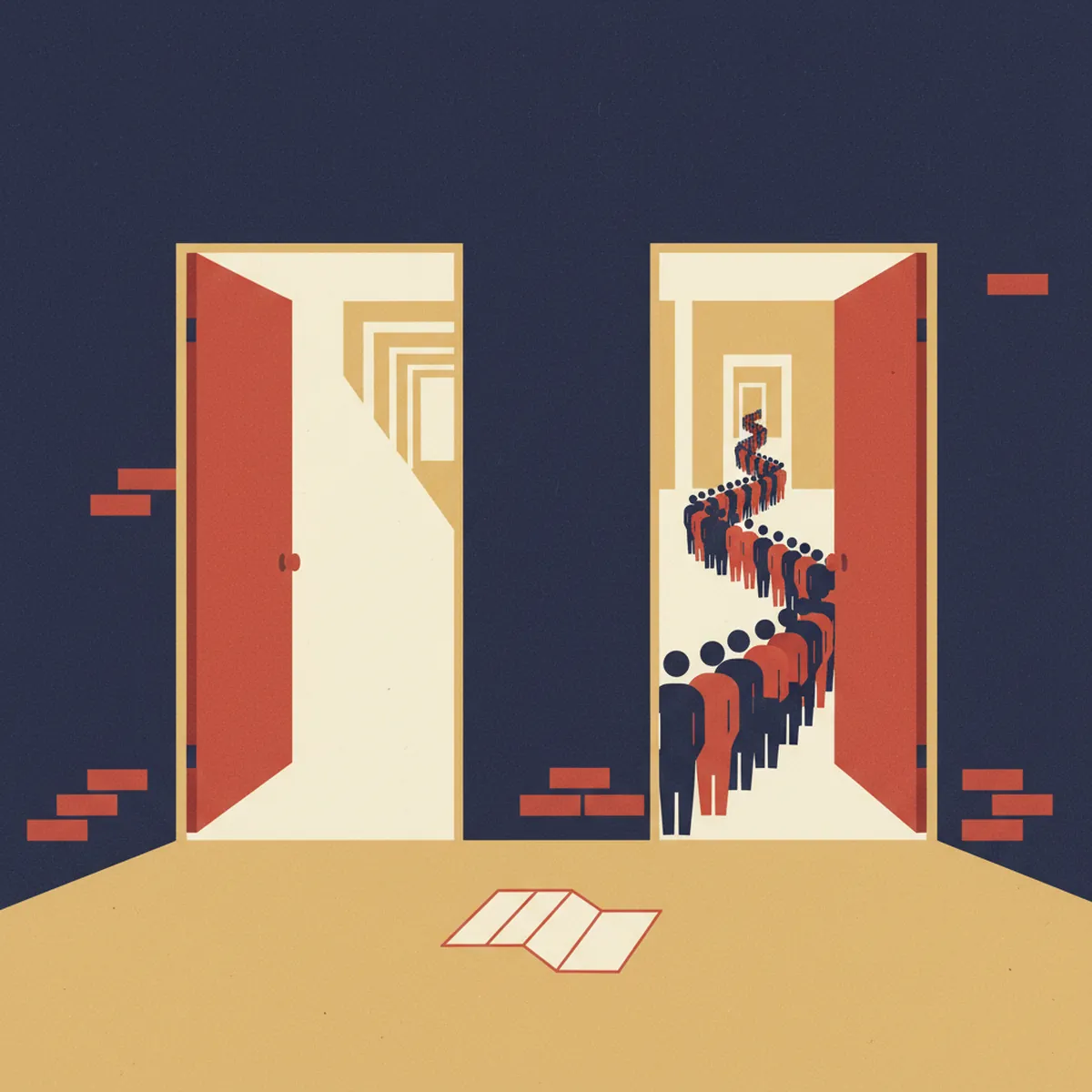
Denmark already insures you — the question is what for#
The Danish public health insurance scheme is residence-based: “If you are living in Denmark and are registered in the Danish Civil Registration System, you are entitled to all public healthcare benefits” Life in Denmark2. Most examinations and treatments are free, but you have to register and get a health insurance card Life in Denmark1.
That single sentence reorganises the whole question. A private policy here is not your route into healthcare; it is a queue-jumping and convenience product layered on a system that already treats you. Which means the useful question is not “should I have insurance?” but “which of the gaps in the public system do I actually want to pay to close?”
Two consequences follow, and both catch newcomers:
- Your cover starts at registration, not at arrival. Between landing and your CPR registration, and for the two to three weeks it takes the plastic card to arrive, you are covered by the health insurance of your home country, not by Denmark. Keep that cover or a travel policy for the gap. More on the card and the temporary proof.
- Private policies cannot fill that gap. Every policy sold here requires a CPR number and a health card as a condition of cover, so the one period when you might feel uninsured is the one period when you cannot buy the product.
What the public system pays for — and where the bill starts#
| Treatment | What you pay |
|---|---|
| GP, out-of-hours doctor, hospital | Nothing in insurance group 1 |
| Specialist | Nothing, if the specialist has a regional agreement and you have a referral |
| Dentistry, under 22 | Nothing — municipal dental care is free |
| Dentistry, adults | The region pays 15-65% of the fee, depending on treatment and age; you pay the rest |
| Physiotherapy | A subsidy of about 40% of the agreed fee, and only with a GP referral |
| Psychology | 60% of the fee, 12 consultations per referral, and only for listed life events |
| Glasses | Nothing, except a subsidy for children under 16 |
Each line is worth pausing on, because these are exactly the places where a private product starts to look attractive:
- Dentistry. Adults get a region subsidy of between 15% and 65% of the dentist’s fee, with fixed amounts for operations and some fillings — the rest is yours sundhed.dk5. This is the single largest everyday bill the public system does not clear.
- Physiotherapy. You need a referral from your GP or from the specialist treating you, and the subsidy is roughly 40% of the agreed fee sundhed.dk6. Region Sjælland runs a pilot until the end of 2026 that lets you go straight to a physiotherapist without a referral.
- Psychology. The subsidy is 60% of the fee, capped at 12 consultations, twice that for depression and anxiety — but only for a closed list of situations: robbery, violence, accidents, bereavement, a suicide attempt, a severely disabling illness in the family, and similar sundhed.dk7. Ordinary stress is not on the list. The referral also expires if you have not started within three months.
- Travel. Neither the yellow card nor the blue EU card covers treatment outside the EU, EEA, Norway, Iceland, Liechtenstein and Switzerland borger.dk11.
You can already get private treatment — when the wait passes 30 days#
This is the fact that changes the calculation, and most people buying insurance have never heard it.
If you are referred to a hospital, you have the right to be examined and diagnosed within 30 days, if it is professionally possible sundhed.dk8. And if the wait for diagnosis or planned treatment would be more than 30 days, udvidet frit sygehusvalg gives you the right to be treated at a private hospital that has an agreement with the regions, at the region’s expense rather than yours sundhed.dk9. The right is also triggered if the hospital moves your operation date.
So the state already buys private capacity when the queue is long. What a private policy adds is what lives inside that 30-day window and outside the referral system: a scan this week rather than next month, a second opinion, physiotherapy and psychology without going through your GP, and a case manager who books the appointments.
Three different products people call health insurance#
| Product | What it is | Who usually pays |
|---|---|---|
| Sundhedsforsikring (treatment insurance) | A private policy that gets diagnosis and treatment started within about ten working days, often with a private provider | An employer, sometimes you |
| Sygeforsikringen danmark | A non-profit membership fund paying fixed subsidies on top of the public scheme | You, quarterly |
| Travel insurance | Treatment and repatriation while you are abroad | You |
Keeping these apart is most of the decision. The treatment policy is the one with exclusions that can make it useless for the case you were imagining. The danmark membership is the one that quietly pays for the dentist. The travel policy is the one you need even though you live in a country with free healthcare.
What a treatment policy actually buys#
Read against the published terms of Dansk Sundhedssikring’s individual product, the shape is consistent across the market Dansk Sundhedssikring, terms15:
- A treatment guarantee. Eligible examination or treatment must be under way within 10 working days of the insurer approving your claim, in the public or private system.
- A network. If the public hospital cannot see you inside that window — including via the free hospital choice and the 30-day rights — the insurer refers you to a private hospital or clinic in its network. You are expected to use the provider it names.
- Therapy without a referral. Physiotherapy, chiropractic and psychology are covered through the insurer’s team rather than your GP’s referral, which is the practical difference for back pain or a course of sessions.
- A second opinion and a case manager who books appointments and reads your records.
- Cover for children in most schemes, up to a stated age.
Two mechanics to understand before you rely on any of it. Everything needs prior approval — treatment started without the insurer’s written go-ahead can be refused, even if it was medically necessary. And outside the network you pay and claim, so the “free private treatment” story only holds inside the provider list.
What it does not cover — the part that decides the purchase#
This is where a private policy stops being a safety net and becomes a fast lane for non-urgent problems. The exclusions below are from one insurer’s published terms, which are typical of the market. The wording varies between providers; the pattern does not.
Acute care is excluded. Accidents, fractures, blood clots, heart disease, stroke and cancer packages are not covered, because the public system is obliged to take them immediately. The terms are explicit that you call your GP, the out-of-hours doctor or 112 instead of the insurer Dansk Sundhedssikring, section 4.315.
Treatment abroad is excluded. Cover applies in Denmark; treatment that starts on a trip is covered only after you are back home Dansk Sundhedssikring, section 4.415. A travel policy is a separate purchase, and the blue EU card is not one.
Anything you already had is excluded — often permanently. There is six months’ waiting time before the insurer covers illness that existed or was diagnosed before the policy started. Chronic and permanent conditions already present when you bought the policy are excluded outright, and the list is long: diabetes, raised blood pressure, arthritis and other degenerative conditions, chronic pain, fibromyalgia, migraine, epilepsy, MS, IBS, glaucoma, tinnitus, menopause symptoms. A chronic condition that first arises during the policy is covered for up to six months from diagnosis, and only where treatment can produce a substantial and lasting improvement Dansk Sundhedssikring, terms15.
Cancer pathways and highly specialised treatment are excluded. Cancer package pathways are named in the exclusions, as are cancers needing complex treatment such as chemotherapy and radiotherapy, and treatment that is best done in the public system, such as organ transplantation and heart and vascular disease.
Everything preventive is excluded: check-ups, health screening, vaccinations and maintenance treatment, along with cosmetic treatment, infertility investigation and treatment, and congenital conditions.
There is an age ceiling. The individual product can be taken out from 18 and stops at the end of the year you turn 67, so a policy you intend to buy in your sixties has to be bought then.
The honest summary: a private policy pays for speed on the problems that can wait, and refuses the problems that frighten people. If the reason you are shopping is “what if I get seriously ill”, the answer is the public system, and no product you can buy changes that.
Sygeforsikringen danmark: the cheap layer, and why timing matters#
Sygeforsikringen danmark is the membership most Danish households have and most newcomers hear about too late. It is a non-profit fund, not an insurer: it pays fixed subsidies towards bills the public scheme leaves you with — dentist, glasses and contact lenses, physiotherapy, chiropractic, psychology, vaccination, dietitian, podiatry, hearing aids — more than 350 items in all sygeforsikring.dk12.
The 2026 prices, per member:
| Group | What it adds | Per quarter | Per year |
|---|---|---|---|
| Basis | Resting membership, no subsidies now, right to switch later | 99 kr | 396 kr |
| Gruppe 5 | The basic subsidy set | 435 kr | 1,740 kr |
| Gruppe 1 | Larger dental and medicine subsidies, Operation add-on after a year | 959 kr | 3,836 kr |
| Gruppe 2 | Gruppe 1 plus subsidies for GP and specialist visits and full cover of reimbursable medicine | 1,138 kr | 4,552 kr |
The conditions are the part that matters, because they are permanent:
- You need a permanent address in Denmark and to be registered in the CPR register.
- Your application must reach them before you turn 60.
- You must be in good health when you join: no medicine in the previous 12 months, and no treatment from a physiotherapist, chiropractor, psychologist or similar in the same period. Pregnancy is not a bar. Applications that do not meet the health requirement are assessed individually, and applicants under 60 may be offered Gruppe S, which excludes medicine subsidies sygeforsikring.dk13.
- Once you are in, the membership has no expiry date, your children can be co-insured free until they turn 16, and you can change group after 12 months without a new health declaration.
- Waiting periods are narrow: 12 months for the Operation and Extended Operation add-ons, and for rejoining after a lapse sygeforsikring.dk14.
The timing is the whole point. You can join while healthy; you cannot join once you have a condition that raises their risk. Every month you postpone is a month of exposure to a permanent exclusion — and the cost of being early is 435 kr a quarter, which is roughly one dentist visit.
What it is not: it does not pay a bill in full, it does not get you a faster appointment, and it does not replace a treatment policy. A crown can still cost you thousands after the subsidy. Read it as a discount card with a lifetime lock, not as insurance.
Who can buy a treatment policy — and the CPR catch#
The eligibility rule is uniform across the products sold here. The insured person must have a permanent address in Denmark (excluding Greenland and the Faroe Islands), hold a Danish health card, and have the right to Danish public health benefits Dansk Sundhedssikring15.
That produces three practical consequences:
- You cannot insure your first weeks. Until you are registered, there is nothing to insure under these terms.
- Arriving with a diagnosis usually means an exclusion or a refusal. Which is fine, as long as you know the public system treats you anyway — free, and without a prior-approval process.
- Prices are quoted per person, and the spread is wide. For a 35-year-old buying an individual policy at the same level of cover, four insurers quoted a median of DKK 374 a month, from DKK 270 to DKK 587 — a factor of 2.2 Sammenligner.dk price index, July 202620. Meanwhile the average gross premium across the whole market was DKK 1,245 a year per insured in 2024, because 79% of policies are paid by an employer and many are group-rated. That gap is the employer subsidy, and it is why buying alone is the exception rather than the rule: only 5.2% of the insured bought their own policy.
If your employer pays, read the payslip#
An employer-paid policy is usually presented as a benefit and rarely as taxable pay. In Denmark it is taxable pay.
The value of an employer-paid health insurance is A-income subject to labour market contribution, reported in field 26 of the income report info.skat.dk17. The exemption is narrow: the premium is tax-free only if the policy covers nothing but prevention and treatment of work-related illness and injury. If it also covers treatment in the private sphere — which is what these policies are for — the entire premium is taxable, and the small-benefit threshold for other staff benefits does not apply to it info.skat.dk, styresignal18, skat.dk16.
In practice: a policy worth a few thousand kroner a year shows up as a few thousand kroner of extra income. That is usually still a good deal compared with buying the same cover yourself at retail, but it is not free, and it is not a reason to decline a pay rise. Ask payroll what value they report, then check the figure on your annual tax statement.
A decision rule that holds up#
- Employer offers it and you pay nothing: take it, and check the tax line above so the January surprise does not arrive.
- You want the everyday bills covered — dentist, glasses, physiotherapy top-ups: join Sygeforsikringen danmark first. It is cheaper than any treatment policy, and it covers the category that a treatment policy ignores.
- You want faster scans, a second opinion or therapy without a referral: a treatment policy is the right product. Get three quotes, and read the pre-existing-condition clause before the price, because that clause is where the value is decided.
- You already have a condition, or you are over 60: expect a private treatment policy to exclude it or refuse you. The realistic combination is the public system plus danmark if they will take you.
- You are worried about emergencies or travel: neither product is the answer. The public system takes acute cases, and a travel policy covers you abroad.
One thing to check before you rely on an employer policy: who owns it. If the employer owns the contract, the cover normally ends with the employment. If you are considering paying for a private policy to keep continuity, ask the insurer whether your seniority transfers: accrued seniority can carry over on a direct switch from another health insurance, but not for chronic conditions Dansk Sundhedssikring, terms15.
If treatment goes wrong#
Compensation for injuries caused by treatment is handled by Patienterstatningen, the impartial public authority that decides whether a patient is entitled to compensation Patienterstatningen19. Applying is free and does not require any insurance — so do not buy a policy believing it is your only route to redress.
Before your card arrives, and when you travel#
- The gap. Your right to public treatment begins with your CPR registration; the plastic card follows in about two to three weeks, and your municipality can issue a free temporary proof in the meantime. The arrival sequence in detail.
- Inside the EU/EEA. Order the free blue European health insurance card, valid for up to five years, which gives you treatment on the same terms as a local in the country you are visiting borger.dk11.
- Outside the EU/EEA. Neither card covers anything. A private travel policy is the only cover, and your Danish treatment policy will not step in.
- What the public system gives you for free anyway, and how the referral system works day to day: how the Danish healthcare system works.
- Everything else you are required to insure — contents, liability, car, dog, and the work-injury policy if you employ someone: insurance in Denmark.
Frequently asked
Do I need private health insurance to live in Denmark?#
No. The Danish public health insurance scheme is residence-based: if you live in Denmark and are registered in the CPR register, you are entitled to the public healthcare benefits, and most examinations and treatments are free. Private cover is optional and only buys speed and extra services.
Does private health insurance replace the yellow health card?#
No, and it cannot. The yellow card is your access to the public system, including your GP, hospitals and the out-of-hours doctor. A private policy works on top of it: it pays for private providers and faster diagnosis, and it specifically excludes acute care, which is where the public system is strongest.
Can I take out private health insurance before I have a CPR number?#
No. The published terms of the policies sold in Denmark require a permanent address in Denmark, a Danish health card and the right to Danish public health benefits. Until you are registered you are covered by the health insurance of your home country, so keep that cover or a travel policy for the first weeks.
Is the health insurance my employer pays for tax-free?#
Usually not. The value of an employer-paid health insurance is A-income and subject to labour market contribution, reported in field 26. The exemption only applies if the policy covers nothing but prevention and treatment of work-related illness and injury; if it also covers ordinary private-sphere treatment, the entire premium is taxable, and the small-benefit threshold does not apply.
Is Sygeforsikringen danmark the same thing as a private health insurance?#
No. It is a non-profit membership fund that pays fixed subsidies towards dentist bills, glasses, physiotherapy, psychology and similar, on top of what the public scheme pays. It does not get you treated faster and it does not pay a hospital bill. Its value is that you can join cheaply while healthy and keep the membership for life.
Can I join Sygeforsikringen danmark if I already have a condition?#
You have to be in good health to join the ordinary groups: no medicine in the last 12 months and no treatment from a physiotherapist, chiropractor or psychologist in the same period. Applications are assessed individually, and applicants under 60 who do not qualify may be offered Gruppe S. That is why joining soon after you arrive matters more than which group you pick.
Will private insurance pay for cancer treatment?#
Normally not. The published terms exclude cancer packages and complicated treatment such as chemotherapy and radiotherapy, which the public system handles through its own pathways. Some policies cover cancer only in the narrow case where the insurer's medical team judges that the public course is creating avoidable delay.
Official sources
- Life in Denmark - Health insurance card lifeindenmark.borger.dk
- Life in Denmark - Entering Denmark from another state (residence-based cover) lifeindenmark.borger.dk
- Life in Denmark - Treatment in private hospitals and clinics in Denmark lifeindenmark.borger.dk
- sundhed.dk - Gratis behandling og tilskud sundhed.dk
- sundhed.dk - Tandlaege og tandpleje (subsidy percentages, free under 22) sundhed.dk
- sundhed.dk - Fysioterapi (referral and subsidy) sundhed.dk
- sundhed.dk - Psykologhjaelp (60%, 12 consultations) sundhed.dk
- sundhed.dk - Ret til hurtig udredning sundhed.dk
- sundhed.dk - Udvidet frit sygehusvalg (private hospital after 30 days) sundhed.dk
- borger.dk - Tilskud til behandling borger.dk
- borger.dk - Det blaa EU-sygesikringskort borger.dk
- Sygeforsikringen danmark - Grupper og 2026 prices sygeforsikring.dk
- Sygeforsikringen danmark - Helbreds- og alderskrav sygeforsikring.dk
- Sygeforsikringen danmark - Karens sygeforsikring.dk
- Dansk Sundhedssikring - Sundhedsforsikring Privat, terms (karens, exclusions) ds-sundhed.dk
- skat.dk - Skat af sundhedsydelser skat.dk
- info.skat.dk - Personalegoder that are A-income (field 26: employer-paid health insurance) info.skat.dk
- info.skat.dk - Styresignal on tax-free health insurances info.skat.dk
- Patienterstatningen - compensation for treatment injuries patienterstatningen.dk
- Sammenligner.dk - health insurance price index (Forsikring og Pension 2024 statistics) sammenligner.dk
Links checked when this guide was last updated (23 October 2026). Rules change — if a link fails, tell us and we'll fix it.